

The missing operations system businesses need “before” automations should be implemented.
The Control Layer is the operations management system that determines what is automated, under what conditions and what rules help protect the business when automations are run.
It is the thinking layer — the design — that ensures automation behaves like a controlled extension of your business, not an unpredictable department within it.
What the Control Layer Governs
It governs:
• Workflow understanding and mapping
• Validating processes before automation
• Risk scoring and prioritization
• Rule-setting for all automation logic
• Error handling and escalation rules
• Human-in-the-loop decision points
• Monitoring, detection, and intervention protocols
Where It Sits Relative to Tools
Tools sit below the control layer – They execute. They repeat instructions. They automate what already exists.
The Control Layer sits above tools – It designs, defines, and constrains what tools are allowed to automate — and what they never should.
Exacerbated Failure Rates
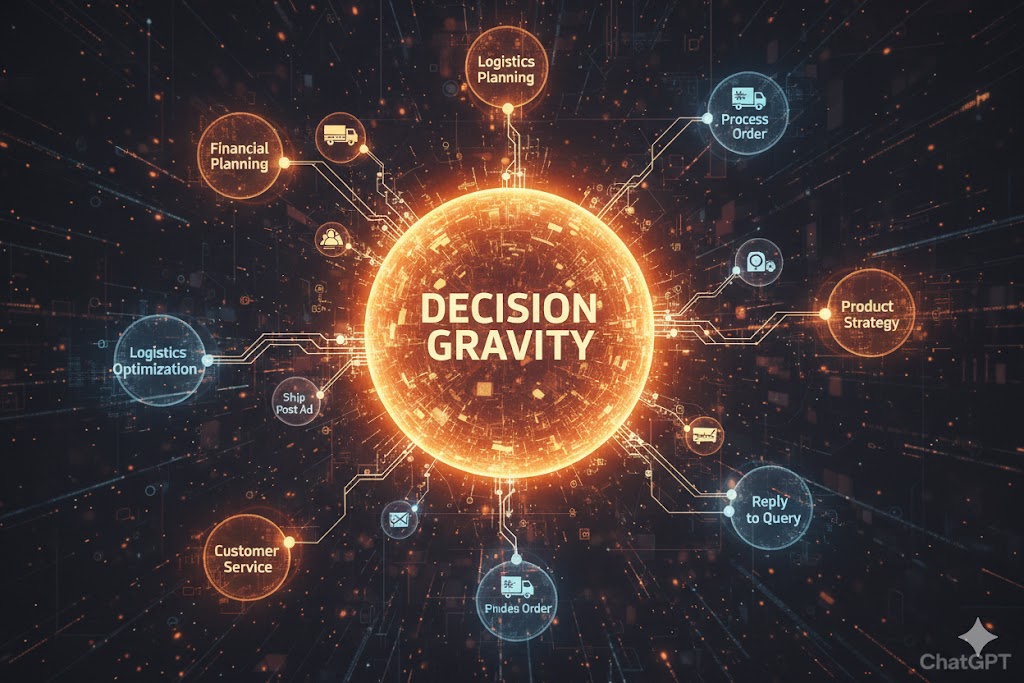
Without a control system, automation doesn’t improve anything — it just magnifies existing problems.
Occasional errors now happen frequently. Small cracks in the foundational processes now become real business problems.
Slow Death
Automation rarely fails unnoticed. Instead, it creates slow operational drift:
• Incorrect inventory updates
• Unsafe workflow loops
• Duplicated orders
• Misrouted tasks
• Data pollution
• Teams losing trust in systems
This damage accumulates unreported, until the cost is no longer avoidable.
No Accountability
When a process breaks and no control layer exists, everyone blames something else:
The tool.
The team.
The workflow.
The vendor.
The system.
No one can answer the critical question: “Why did this happen?”
The absence of governance removes ownership — and accountability with it.
What Automation Executes
Automation systems run and do exactly what they’re told:
• Triggers
• Conditions
• Actions
• API calls
• Routines
• Schedules
They do not question logic. They do not detect operational intention. They do not correct flawed instructions.
What The Control System Forces
The control system helps you establish rules that automations must obey:
• What is valid
• What is stable
• What is safe
• What is allowed to run
• What requires human review
• What requires validation before expansion
Control protects the business from the automation it creates.
Why Mixing Them Creates Risk
When businesses treat automation as control, they assume tools will “handle the complexity.” They won’t.
Automation executes complexity — it doesn’t govern it.
This is why companies experience:
• Unexpected downstream consequences
• Cascading failures
• Unknown misconfigurations
• Costly operational decline
Automation without control is simply growth without safety protocols.
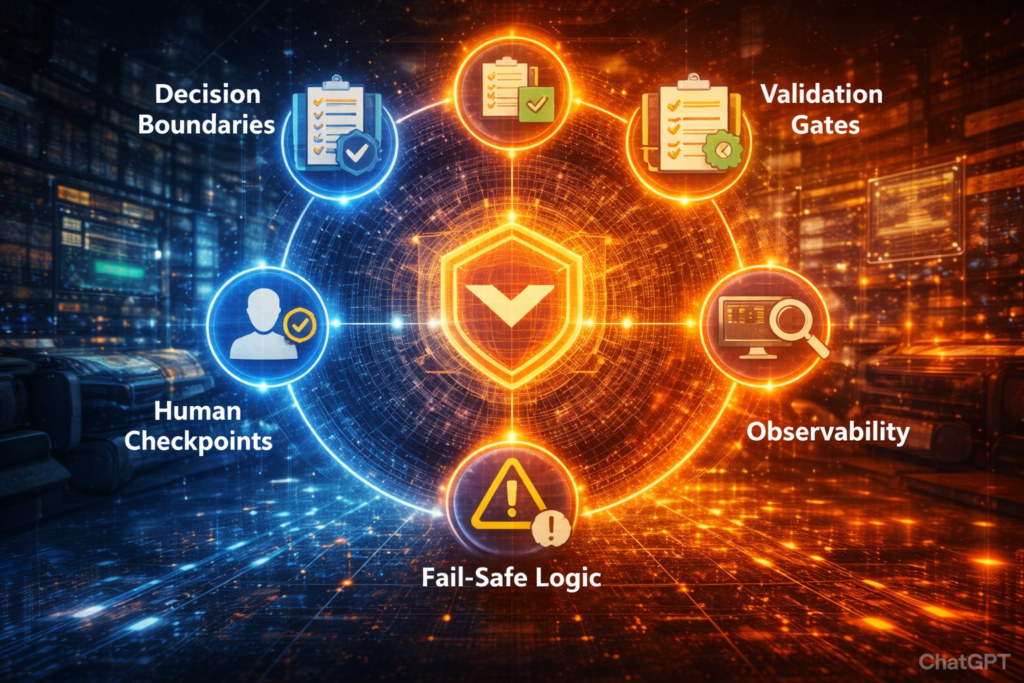
A decent control layer performs these five governing functions:
Defines what may and may not be automated — and under what conditions.
Ensure every workflow passes operational tests before automation takes over.
Identify where human judgment is still needed, document it and specify the point in the automation.
Design escalation paths and stop conditions when something breaks or drifts.
Monitor systems with notifications and alerts sent to people that can prevent errors happening without anyone knowing - so that they can fix it before it breaks.
These functions are the difference between automation that supports the business and automation that endangers it.
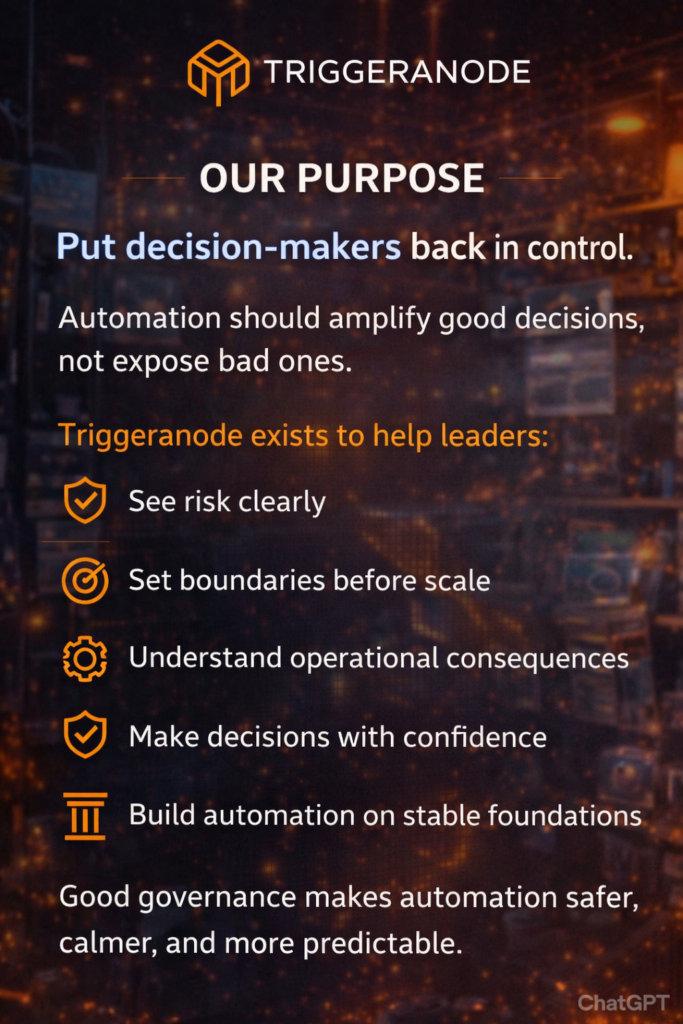
Triggeranode’s Role
Triggeranode has created the control layer your business needs — helping you turn your knowledge into managed, data backed, operating procedures.
Translator of Risk
It converts business problems into clear, understandable risk factors that guide automation decisions.
Rule Creation
It defines what’s allowed to run, what isn’t, what needs human review and what must be stabilized before growth happens.
Triggeranode doesn’t replace tools. It ensures that tools can operate safely inside a structure that protects the business.
Understand Before You Act
You gain a complete understanding of your processes, risks, and dependencies before anything is automated.
Reduced Liability
Errors become predictable, detectable, and preventable — instead of harmful surprises discovered too late.
Slower Start, Safer Growth
Triggeranode intentionally slows the beginning of automation to eliminate the chaos later.
The result is infrastructure that expands without breaking, buckling, or overwhelming your teams.
The Control Layer is not optional. It’s the foundation of responsible, governed automation.
Understand your background business systems completely.
Reduce your risk of failure.
Automate with confidence.

Build Once. Validate. Automate. Let it Run
Copyright 2026, TRIGGERANODE. All Rights Reserved.